FIFA distributes $2 million per year to each of its 211 member associations through the Forward Development Programme (2023-2026 cycle).
Over four years, this totals $8 million per association—whether you’re Brazil or Samoa, the allocation is identical.
This guaranteed funding applies universally regardless of World Cup qualification, GDP, or football success.
The $2 million annual allocation ($8M ÷ 4 years) releases quarterly based on approved project milestones, not as lump sums.
Member associations submit project proposals to FIFA, which reviews and approves eligible initiatives before disbursing funds incrementally as work progresses.
Beyond the $1.688 billion to member associations ($8M × 211), FIFA allocates an additional $360 million to six confederations ($60M each) and $252 million for regional associations and special projects, totaling $2.3 billion for Forward 3.0.
Since the programme launched in 2016, FIFA has distributed approximately $5.1 billion globally by 2026.
Complete Budget Breakdown: Where $2.3 Billion Goes
| Recipient | Total (2023-26) | Annual Amount | % of Budget |
| 211 Member associations | $1.688B | $422M/year | 73% |
| 6 Confederations | $360M | $90M/year | 16% |
| Regional associations & projects | $252M | $63M/year | 11% |
| Total Forward 3.0 | $2.3B | $575M/year | 100% |
Confederation allocations ($60M each, 2023-2026): UEFA (Europe), CONMEBOL (South America), CONCACAF (North/Central America), CAF (Africa), AFC (Asia), and OFC (Oceania) each receive $60 million to fund regional competitions, referee development, and confederation operations.
The $8 Million Per Association: Operational vs Project Funding
Each association’s $8 million divides into two categories:
- Operational funding (up to $5 million): Covers running costs including staff salaries, administrative expenses, governance improvements, and day-to-day federation operations. Associations with annual revenues under $4 million receive an additional $1.2 million for travel and equipment.
- Project funding ($3 million): Dedicated to specific development initiatives requiring FIFA approval—infrastructure construction, competition development, technical programmes, and women’s football initiatives. Projects must demonstrate clear development outcomes and meet Forward Programme criteria.
- What determines actual amounts received: While $8M is the maximum, associations receive funding based on approved project proposals. Developed football nations with capacity to implement multiple large projects (England, Germany, France) typically utilize the full $8M allocation. Smaller associations (Pacific islands, Caribbean nations) may receive $3-6M depending on project submission volume and administrative capacity to execute programmes.
Approved Uses: Infrastructure for Women’s Football
FIFA approves Forward funding for five primary categories:
Infrastructure projects:
- Technical centers and training facilities
- Artificial turf pitches and natural grass fields
- National football headquarters buildings
- Stadium renovations and improvements
- Administrative offices
Competition development:
- Domestic league operations and prize money
- Youth tournaments and age-group competitions
- Women’s leagues and championships
- Futsal and beach soccer tournaments
- Grassroots competitions at local levels
Technical development:
- Coaching education and certification programmes
- Referee training and advancement systems
- Video Assistant Referee (VAR) technology installation
- Sports medicine facilities and equipment
- Talent identification and scouting systems
Women’s football initiatives:
- Girls’ grassroots programmes (ages 5-16)
- Women’s league funding and operations
- Female coaching development and certification
- Dedicated training facilities for women’s teams
Administration and governance:
- Operational costs for running associations
- Financial management and accounting systems
- Compliance programmes meeting FIFA standards
- IT infrastructure and digital media capabilities
Complete Project Examples: How Countries Use Their $8M
England FA (2020-2022 cycle, $8M utilized):
- Wildcats girls programme: $2.2M—created 6,000 new teams for girls aged 5-11, fundamentally expanding women’s grassroots game
- Coach education expansion: $2.5M—certified 3,200 new coaches across all levels
- Facility improvements: $2M—upgraded 40+ community training sites
- Administrative operations: $1.3M—governance systems and staff
Thailand FA (2023-2026 estimated, $7M utilized):
- House of Thai Football: $2.4M—Southeast Asia’s first VAR room, futsal courts, athlete facilities
- Youth league operations: $1.8M—funding for U-15, U-17, U-19 competitions
- Women’s football development: $1.5M—league funding and grassroots programmes
- Technical training: $1.3M—coaching and referee certification
Kyrgyz Republic (2020-2023, $6M utilized):
- National headquarters: $3.2M—modern facility with training pitches, accommodation, education centers opened May 2023
- Domestic league support: $1.5M—operational funding for top-tier and youth competitions
- Administrative modernization: $1.3M—governance systems and compliance
Bangladesh FA (2023-2026 estimated, $4M utilized):
- Artificial pitches in Dhaka: $1.2M—two new all-weather training facilities
- Youth competition funding: $1.5M—age-group tournament operations
- Women’s league establishment: $800K—funding new women’s domestic competition
- Administrative operations: $500K—federation running costs
Forward Funding vs World Cup Prize Money: Separate Systems
Many confuse development grants with tournament earnings—they’re completely different:
FIFA Forward Programme:
- Who: All 211 member associations
- Amount: $2M/year ($8M per 4-year cycle)
- Requirement: No World Cup qualification needed
- Usage: Must fund FIFA-approved development projects
- When: Quarterly payments throughout cycle
World Cup Prize Money:
- Who: Only 32 teams qualified for 2022 (48 in 2026)
- Amount: $42M for Argentina winning 2022, $9M for group stage exit
- Requirement: Must qualify and compete in tournament
- Usage: Flexible—federations decide allocation
- When: Lump sum after tournament completion
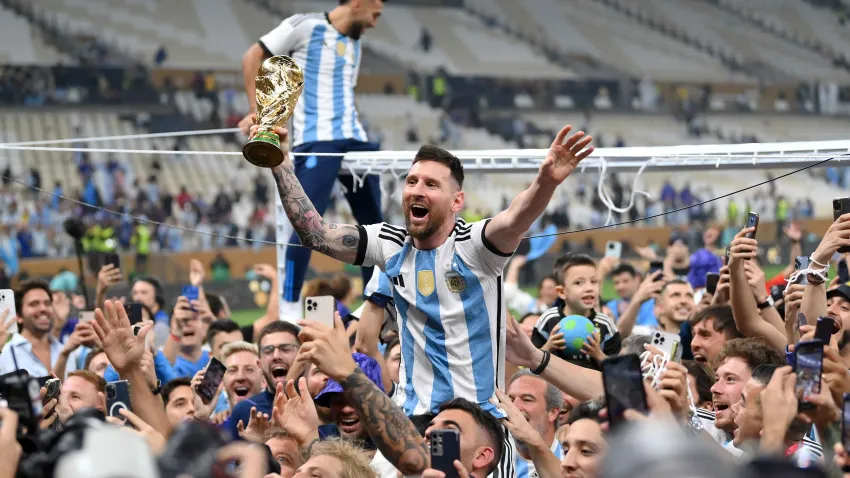
Example: Argentina receives $2M annually ($8M total) like every FIFA member, PLUS earned $42M for winning 2022 World Cup = $50M total FIFA payments for 2023-2026 cycle.
Which Countries Get the Most FIFA Money Overall?
Combining the Forward Programme and World Cup earnings reveals massive financial disparities:
| Country | Forward 2023-26 | World Cup 2022 | Total FIFA Payments |
| Argentina | $8M | $42M (winner) | $50M |
| France | $8M | $30M (runner-up) | $38M |
| Croatia | $8M | $27M (3rd place) | $35M |
| Morocco | $8M | $25M (4th place) | $33M |
| USA | $8M | $13M (Round of 16) | $21M |
| Germany | $8M | $9M (group exit) | $17M |
| Bhutan (never qualified) | $8M | $0 | $8M |
Key insight: World Cup success creates 6:1 financial advantage. Argentina received 6.25x more than non-qualifying nations (179 countries) despite Forward Programme “equality.”
The $8M guaranteed funding doesn’t level the financial playing field—tournament performance generates far greater revenues for successful football nations.
How to Apply: Timeline for Member Associations
Annual application cycle:
- July-September: Member associations submit project proposals to FIFA including detailed budgets, implementation timelines, expected outcomes, and development impact assessments.
- October-December: FIFA technical committees review applications against Forward Programme criteria—infrastructure quality, competition sustainability, governance improvements, women’s football impact.
- January: Funding decisions announced for following calendar year. Approval rate approximately 85% for projects meeting basic criteria.
- February-March: Approved projects receive first quarterly disbursements (25% of annual allocation).
- Quarterly releases: Funds distributed every 3 months (March, June, September, December) based on milestone completion and progress reporting.
- Check your country’s allocations: Visit inside.fifa.com/advancing-football/fifa-forward to access the public database showing each member association’s approved projects, funding amounts, implementation status, and completion reports since 2016.
Accountability and Misuse Cases
FIFA audits all Forward funding, but corruption and misuse occur:
- Uganda (2017): $500,000 Forward funds allegedly stolen by federation officials. FIFA suspended funding pending investigation, removed leadership, and demanded financial audits before reinstating payments.
- Haiti (2020): Sexual abuse scandal involving federation officials led to FIFA intervention, funding restrictions, and governance reforms required before full allocation resumed.
- Afghanistan (2021): Forward funding suspended after Taliban takeover due to restrictions on women’s football—violating FIFA’s requirement that funds support both men’s and women’s game equally.
Penalties for misuse:
- Immediate funding suspension
- Leadership bans from football administration
- Mandatory independent financial audits
- Repayment demands for misappropriated funds
- Exclusion from future Forward cycles
Oversight mechanisms: Member associations must provide quarterly progress reports with photos, financial documentation, and outcome metrics. FIFA conducts on-site audits of major projects. The FIFA Forward Awards recognize exemplary implementations—England, Thailand, and Kyrgyz Republic won Gold awards in 2025 for outstanding project execution.
Historical Growth: Investment Progression 2016-2026
| Cycle | Period | Total Investment | Per Association | Annual Rate |
| Forward 1.0 | 2016-2019 | $1.4B | ~$6M | $1.5M/year |
| Forward 2.0 | 2020-2022 | $1.4B | ~$6M | $2M/year |
| Forward 3.0 | 2023-2026 | $2.3B | $8M | $2M/year |
| Total by 2026 | 2016-2026 | $5.1B | — | — |
The 33% increase in Forward 3.0 funding ($6M to $8M per association) was funded by:
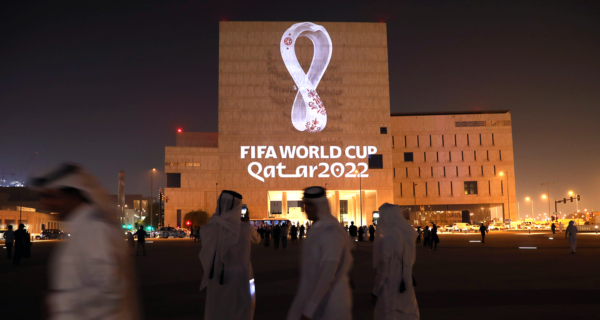
- 2022 World Cup revenue: $7.5 billion from Qatar tournament
- TV rights expansion: 2023-2026 broadcast contracts worth $3.3B (up from $1.8B)
- 2026 World Cup premiums: Sponsors paying 40-60% more for expanded 48-team format
- Club World Cup 2025: New revenue stream from expanded 32-team tournament
FIFA President Gianni Infantino pledged 80% of revenues return to football development, up from 70% under previous administration.
FAQs
How much money does FIFA give each country per year?
$2 million annually per member association through Forward Programme (2023-2026). Over four years, this totals $8 million per association regardless of size, GDP, or World Cup success.
Do all 211 FIFA members get the same amount?
Yes, maximum allocation is $8M for all members (2023-2026). Actual amounts depend on approved projects—developed nations typically utilize full $8M, while smaller associations may receive $3-6M based on project capacity.
Which country gets the most FIFA money overall?
Argentina received $50M total for 2023-2026: $8M Forward funding + $42M for winning 2022 World Cup. France second with $38M ($8M + $30M runner-up prize). Countries that never qualify receive only $8M Forward funding.
Is FIFA Forward money the same as World Cup prize money?
No. Forward is universal development funding ($8M to all 211 members). World Cup prize money is tournament earnings (only 32 qualifiers in 2022, amounts vary by finish). Successful nations receive both.
How do countries apply for FIFA Forward funding?
Member associations submit project proposals July-September annually. FIFA reviews October-December, announces approvals in January. Funds release quarterly based on milestones. Check inside.fifa.com/advancing-football/fifa-forward for your country’s allocations.
Can FIFA Forward funds be stolen or misused?
Yes. Uganda lost $500K to alleged theft (2017), Haiti faced restrictions after abuse scandal (2020), Afghanistan suspended for women’s football restrictions (2021). FIFA audits all spending and penalizes misuse with funding suspension and leadership bans.