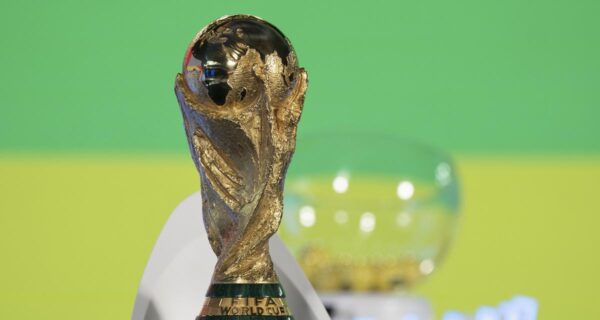
The FIFA World Cup is held every four years, a tradition established in 1930 with only two interruptions in 1942 and 1946 due to World War II.
This four-year cycle has remained constant since resuming in 1950, making it one of the most consistent patterns in international sports.
The next tournaments are scheduled for 2026 (USA/Mexico/Canada), 2030 (Morocco/Spain/Portugal with centenary matches in Uruguay/Argentina/Paraguay), and 2034 (Saudi Arabia).
The 2026 edition introduces an expanded 48-team format, increasing from the current 32 teams and extending the tournament duration.
You’ll discover why the four-year frequency was chosen, complete upcoming World Cup schedule through 2034, how the tournament timeline works within each cycle, and the historical exceptions that temporarily disrupted the pattern.
The Four-Year World Cup Cycle: Why Every Four Years?
FIFA established the four-year frequency in 1930 for several strategic reasons. This spacing allows sufficient time between tournaments to maintain prestige and global anticipation, prevents player fatigue from over-competition at the highest level, and gives host nations adequate preparation time (typically 7-10 years from selection to hosting).
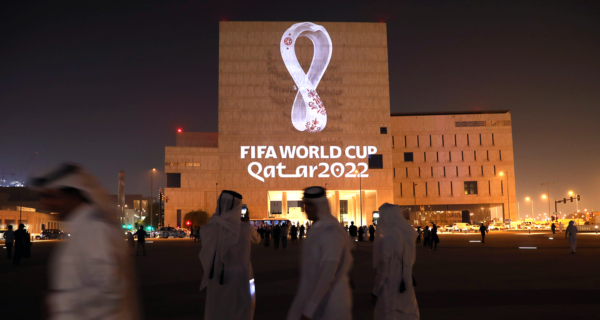
The pattern began immediately: 1930 (Uruguay), 1934 (Italy), 1938 (France), then a 12-year gap during World War II, resuming in 1950 (Brazil). Since 1950, the four-year cycle has continued uninterrupted through 2022 (Qatar) and extends through confirmed future editions.
The cycle coincides strategically with continental championships. UEFA European Championship and Copa América also follow four-year cycles, typically scheduled two years offset from the World Cup. This prevents fixture congestion and maintains distinct tournament identities.
The Women’s World Cup adopted the same four-year frequency on alternating years (2023, 2027, 2031), maximizing global soccer attention without direct competition.
In 2021, FIFA proposed changing men’s World Cup frequency to every two years, but the plan faced widespread opposition from confederations, leagues, and players before being rejected in 2022.
Upcoming FIFA World Cup Schedule (2026-2034)
2026 FIFA World Cup:
- Hosts: United States, Mexico, Canada (first tri-nation hosting)
- Dates: June 11 – July 19, 2026
- Format: Expanded 48-team tournament (up from 32)
- Matches: 104 total games (increased from 64)
- Venues: 16 host cities across three countries
- Significance: Largest World Cup in history, first in North America since USA 1994
2030 FIFA World Cup:
- Primary hosts: Morocco, Spain, Portugal
- Centenary matches: Uruguay, Argentina, Paraguay host opening games
- Dates: June-July 2030 (exact dates TBD)
- Format: 48 teams (continuing expanded format)
- Significance: 100th anniversary of first 1930 tournament in Uruguay
- Unique: First tournament spanning three continents (Africa, Europe, South America)
2034 FIFA World Cup:
- Host: Saudi Arabia (confirmed December 2024)
- Dates: December 2034-January 2035 (likely, due to summer heat concerns)
- Format: 48 teams
- Considerations: Similar to Qatar 2022, extreme summer temperatures may force winter scheduling
Qualifying for each tournament begins approximately 2-3 years in advance across six confederations (UEFA, CONMEBOL, CONCACAF, AFC, CAF, OFC).
The 2026 qualifiers commenced in 2024, with regional competitions determining the 48 participants.
Tournament Schedule Within Each World Cup
Each four-year cycle follows a consistent timeline structure:
Qualifying phase (2-3 years): Continental confederations conduct qualification tournaments. UEFA (Europe) allocates most spots (16 in 2026), followed by Africa, Asia, South America, CONCACAF, and Oceania. Host nations receive automatic qualification.
Final tournament (29-32 days): The main event typically spans approximately one month. Traditional scheduling occurs June-July (Northern Hemisphere summer), though exceptions like Qatar 2022 (November-December) and likely Saudi Arabia 2034 (winter) accommodate climate concerns.
Tournament structure:
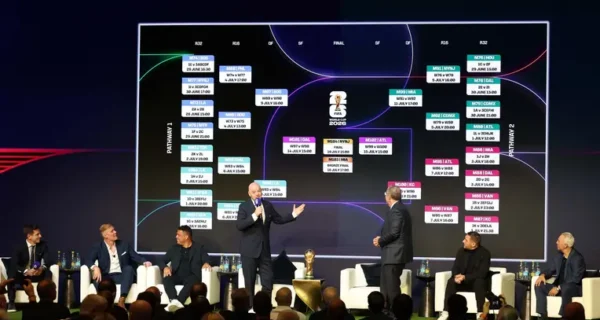
- Group stage: 8 groups of 4 teams historically; expanding to 12 groups of 4 teams in 2026
- Knockout rounds: Round of 16, quarterfinals, semifinals, third-place match, final
- Match frequency: Games occur daily during group stage, every 2-4 days in knockout rounds
Host selection occurs 7-11 years before the tournament through FIFA’s bidding process. The FIFA Congress votes on host nations after evaluating infrastructure, stadiums, transportation, and accommodation capacity.
Recent selections include 2026 (awarded 2018), 2030 (awarded 2024), and 2034 (awarded 2024).
Historical Exceptions to the Four-Year Frequency
The four-year cycle has been interrupted only twice in World Cup history:
1942 World Cup: Cancelled due to World War II. Originally scheduled as the fourth tournament following 1930, 1934, and 1938, the global conflict made international sporting events impossible. No host had been selected before cancellation.
1946 World Cup: Also cancelled as the world recovered from World War II’s aftermath. Infrastructure damage, economic devastation, and ongoing political instability prevented organizing a global tournament.
This created a 12-year gap between the 1938 (France) and 1950 (Brazil) tournaments—the longest interruption in World Cup history. The 1950 tournament marked the resumption of the regular four-year cycle that continues today.
Since 1950, no other cancellations or frequency changes have occurred despite the Cold War, regional conflicts, and global events including the COVID-19 pandemic (which delayed Euro 2020 but left World Cup 2022 on schedule).
The tournament format expanded over decades (16 to 24 to 32 to 48 teams), but the four-year frequency remained sacred.
People Also Ask
How often is the FIFA World Cup held?
The FIFA World Cup is held every four years. This frequency has been maintained since 1930, with only two exceptions in 1942 and 1946 due to World War II.
When is the next FIFA World Cup?
The next FIFA World Cup is in 2026, jointly hosted by USA, Mexico, and Canada from June 11-July 19. It will be the first 48-team tournament with 104 matches.
Why is the World Cup every 4 years?
The four-year cycle maintains tournament prestige, prevents player fatigue, allows adequate host nation preparation time (7-10 years), and coordinates with continental championships like UEFA Euro and Copa América.
Has the World Cup ever been cancelled?
Yes, twice. The 1942 and 1946 tournaments were cancelled due to World War II, creating a 12-year gap between 1938 and 1950. No cancellations have occurred since.
How many World Cups have there been?
There have been 22 FIFA World Cups through 2022 (Qatar). The tournament began in 1930, with the 23rd edition scheduled for 2026.
When will the 2026 World Cup be held?
The 2026 World Cup runs June 11 – July 19, 2026, across 16 cities in USA, Mexico, and Canada. It’s the first expanded 48-team format.
Is the Women’s World Cup the same schedule?
Yes, the Women’s World Cup also occurs every four years but on alternating years from the men’s tournament (2023, 2027, 2031) to avoid direct competition.