Only 18 countries have hosted the World Cup’s 22 tournaments since 1930. But that exclusivity is ending fast. By 2026, three nations share hosting for the first time.
By 2030, six countries across three continents co-host the centenary edition. And by 2034, Saudi Arabia joins Qatar as the Middle East’s second host.
Mexico becomes the first three-time host in 2026 (1970, 1986, 2026). South Africa (2010) and Qatar (2022) broke Europe’s 80-year stranglehold on the tournament. Europe has still hosted half of all World Cups—12 of 24 tournaments through 2034.
You’ll learn which 18 nations hosted, when they staged tournaments, who’s hosting next through 2034, how much hosting costs, and why the single-nation era is ending.
Complete FIFA World Cup Host Countries (1930-2022)
| Year | Host(s) | Teams | First-Time? | Special Significance |
| 1930 | Uruguay | 13 | ✓ | Inaugural tournament; host won |
| 1934 | Italy | 16 | ✓ | Host won |
| 1938 | France | 15 | ✓ | Last pre-WWII tournament |
| 1942 | Cancelled | — | — | World War II |
| 1946 | Cancelled | — | — | World War II |
| 1950 | Brazil | 13 | ✓ | First post-war tournament |
| 1954 | Switzerland | 16 | ✓ | Smallest host nation (7M population) |
| 1958 | Sweden | 16 | ✓ | Brazil’s first European victory |
| 1962 | Chile | 16 | ✓ | First South American host since 1930 |
| 1966 | England | 16 | ✓ | England’s only World Cup title |
| 1970 | Mexico | 16 | ✓ | First North American host |
| 1974 | West Germany | 16 | ✓ | First 16-team format (group stage redesigned) |
| 1978 | Argentina | 16 | ✓ | Host won; first Argentina title |
| 1982 | Spain | 24 | ✓ | Expanded to 24 teams |
| 1986 | Mexico | 24 | Repeat | First nation to host twice |
| 1990 | Italy | 24 | Repeat | Italy’s second hosting (56 years after 1934) |
| 1994 | USA | 24 | ✓ | Record 3.6M attendance (highest ever) |
| 1998 | France | 32 | Repeat | Expanded to 32 teams; France won |
| 2002 | Japan & South Korea | 32 | ✓ both | First co-hosted; first in Asia |
| 2006 | Germany | 32 | Repeat | Unified Germany’s first (West Germany 1974) |
| 2010 | South Africa | 32 | ✓ | First African host (after Morocco’s 5 failed bids) |
| 2014 | Brazil | 32 | Repeat | Brazil’s second (64 years after 1950) |
| 2018 | Russia | 32 | ✓ | First in Eastern Europe |
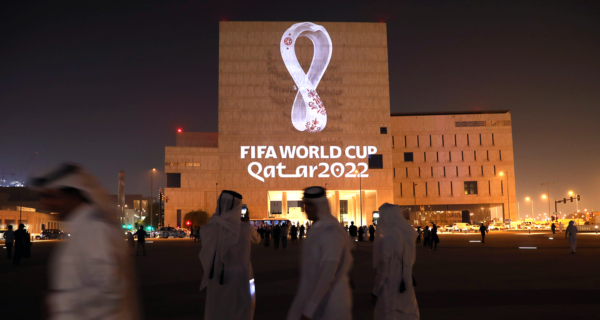
| 2022 | Qatar | 32 | ✓ | First Middle Eastern host; first November-December |
Key milestones:
- 1930: Uruguay hosted and won the inaugural tournament
- 1986: Mexico became the first repeat host after Colombia withdrew
- 2002: Japan and South Korea pioneered co-hosting model
- 2010: South Africa ended Europe/South America duopoly as first African host
- 2022: Qatar became first Middle Eastern host and moved to November-December due to extreme summer heat
The 1942 and 1946 tournaments were cancelled due to World War II.
Countries That Have Hosted Multiple Times
| Country | Times Hosted | Years | Gap Between |
| Mexico | 3 | 1970, 1986, 2026 | 16 years, then 40 years |
| Brazil | 2 | 1950, 2014 | 64 years (longest gap) |
| France | 2 | 1938, 1998 | 60 years |
| Germany | 2 | 1974, 2006 | 32 years |
| Italy | 2 | 1934, 1990 | 56 years |
| USA | 2 | 1994, 2026 | 32 years |
| Argentina | 2* | 1978, 2030 | 52 years |
| Spain | 2* | 1982, 2030 | 48 years |
| Uruguay | 2* | 1930, 2030 | 100 years (centenary) |
*2030 includes centenary commemorative matches
Mexico becomes the first three-time host in 2026. The nation originally hosted in 1970, then again in 1986 after Colombia withdrew. The 56-year span (1970-2026) reflects FIFA’s rotation policy allowing other nations opportunities.
Europe has provided the most repeat hosts. Italy, France, and Germany each hosted twice. This reflects the continent’s football tradition, existing infrastructure, and proximity to FIFA’s Swiss headquarters.
Hosting gaps: Brazil’s 64-year gap between 1950 and 2014 represents the longest span. France waited 60 years (1938-1998) for its second hosting. These extended periods demonstrate FIFA’s commitment to spreading tournaments globally rather than favoring traditional powers.
How Much Does Hosting Cost?
| Host | Year | Total Spending | Per Stadium | Context |
| Qatar | 2022 | $229 billion | $28.6B | Built infrastructure from scratch |
| Brazil | 2014 | $15 billion | $1.5B | Renovated existing stadiums |
| Russia | 2018 | $11.6 billion | $1.2B | Mix of new and renovated venues |
| South Africa | 2010 | $3.6 billion | $450M | First African host |
| Germany | 2006 | $4.3 billion | $539M | Used existing infrastructure |
Modern hosting costs $10-20 billion excluding Qatar’s infrastructure outlier. Qatar spent $229B because it built metro systems, airports, roads, hotels, and eight stadiums from scratch.
The 48-team format starting in 2026 will increase costs by 40-50%. This explains the shift to multi-nation co-hosting.
Three countries sharing infrastructure burden makes hosting financially viable. Single nations would struggle to justify $15-25 billion investments for a month-long tournament.
Upcoming FIFA World Cup Hosts (2026, 2030, 2034)
2026 FIFA World Cup: USA, Mexico, Canada
The 2026 tournament marks the first three-nation co-hosting. USA, Mexico, and Canada will share 16 host cities (11 USA, 3 Mexico, 2 Canada). The tournament expands to 48 teams (up from 32) with 104 matches (up from 64).
Mexico becomes the first three-time host. The nation previously staged 1970 and 1986 tournaments.
USA hosts for the second time after the record-breaking 1994 tournament. The country will handle 60 of 104 matches due to existing stadium capacity.
Canada hosts for the first time. The nation last qualified for a World Cup in 1986 and gains automatic entry as co-host.
All three hosts automatically qualify for the tournament—a significant advantage for Canada.
2030 FIFA World Cup: Six Nations Across Three Continents
The 2030 tournament features the most geographically diverse hosting arrangement in World Cup history. Morocco, Spain, and Portugal serve as primary hosts handling the majority of matches.
Uruguay, Argentina, and Paraguay each host one opening match commemorating the 100th anniversary of Uruguay’s inaugural 1930 tournament.
Morocco becomes the first African nation to host after losing five consecutive bids (1994, 1998, 2006, 2010, 2018). The nation finally succeeds by partnering with Spain and Portugal.
Spain hosts for the second time. The country previously staged the 1982 tournament.
Portugal hosts for the first time despite producing legendary players like Eusébio, Figo, and Ronaldo.
Uruguay returns exactly 100 years after hosting and winning the first World Cup in 1930. The centenary celebration recognizes Uruguay’s historic contribution to the tournament.
Argentina hosts for the second time after the 1978 tournament.
Paraguay hosts for the first time as part of the South American centenary celebrations.
FIFA confirmed this unprecedented arrangement on December 11, 2024.
2034 FIFA World Cup: Saudi Arabia
Saudi Arabia won unopposed after FIFA’s accelerated bidding process gave potential hosts just 26 days to submit proposals. China did not bid despite previous interest, leaving Saudi Arabia as the only candidate.
The tournament will be the Middle East’s second hosting after Qatar 2022. Extreme summer heat (120°F+) will likely shift scheduling to November-December similar to Qatar.
The 48-team format continues from 2026. Saudi Arabia must build or renovate 12-15 stadiums to accommodate the expanded tournament. Specific host cities remain under development.
Historical Host Distribution by Continent (1930-2022)
| Continent | Tournaments | Different Countries | % of Total |
| Europe | 11 | 9 nations | 50% |
| South America | 5 | 4 nations | 23% |
| North America | 3 | 2 nations | 14% |
| Asia | 2 | 3 nations | 9% |
| Africa | 1 | 1 nation | 5% |
Europe dominated early tournaments. From 1930-1974, Europe hosted 10 of 15 World Cups. This reflected the continent’s football infrastructure, proximity to FIFA headquarters, and wealth to afford hosting costs. Trans-Atlantic travel difficulties in the 1930s-1950s made European hosting more practical.
FIFA deliberately expanded hosting after 1970. Mexico broke the Europe/South America duopoly in 1970. The USA brought the World Cup to the largest untapped market in 1994. Asia gained representation in 2002 via Japan/South Korea co-hosting. Africa finally hosted in 2010 after 80 years.
Oceania never hosted. Australia competes in the Asian Football Confederation for FIFA purposes. No other Oceania nation has infrastructure for a 32-team tournament. New Zealand lacks sufficient stadiums and hotel capacity.
Future Host Distribution (2026-2034)
| Tournament | Hosts | New Countries | Continents |
| 2026 | USA, Mexico, Canada | Canada | North America |
| 2030 | Morocco, Spain, Portugal, Uruguay, Argentina, Paraguay | Morocco, Portugal, Paraguay | Africa, Europe, South America (3 continents) |
| 2034 | Saudi Arabia | Saudi Arabia | Middle East/Asia |
Future hosting tilts toward underrepresented regions. By 2034, Asia will have hosted three times (Japan/Korea, Qatar, Saudi Arabia). Africa gains its second host with Morocco in 2030. North America strengthens its position with the massive 2026 tournament.
Europe’s dominance wanes. After hosting 50% of tournaments through 2022, Europe shares 2030 with Africa and South America. This reflects FIFA’s globalization strategy spreading the World Cup to new markets.
Notable Hosting Firsts
- First host (1930): Uruguay hosted and won the inaugural tournament with 13 teams.
- First repeat host (1986): Mexico became the first nation to host twice, stepping in after Colombia withdrew.
- First co-hosting (2002): Japan and South Korea shared the tournament. Both nations automatically qualified.
- First African host (2010): South Africa hosted after Morocco failed five consecutive bids.
- First Middle Eastern host (2022): Qatar became the first host in the Arab world. Extreme heat forced a November-December schedule.
- First three-nation co-hosting (2026): USA, Mexico, and Canada share 16 host cities.
- First 48-team format (2026): The tournament expands from 32 to 48 teams with 104 matches.
- Most geographically diverse (2030): Six nations across three continents host in a single tournament.
- First three-time host (2026): Mexico spans 56 years of hosting (1970, 1986, 2026).
Why Some Football Powers Haven’t Hosted
China—World’s second-largest economy:
China has 1.4 billion people and the economic capacity to host. The nation successfully staged the 2008 Olympics and has built hundreds of stadiums in the past decade. However, China did not bid for 2034 after FIFA’s accelerated 26-day bidding window favored Saudi Arabia.
Asian confederation rotation (Qatar 2022, Saudi Arabia 2034) means China cannot bid until 2042 at earliest. President Xi Jinping previously targeted World Cup hosting as a national goal, suggesting a future Chinese bid is likely.
India—World’s largest population:
India has 1.4 billion people but cricket dominates sports culture. Football infrastructure remains limited to 3-4 world-class stadiums. The nation generates $11 billion annually from cricket’s IPL league and prioritizes Cricket World Cup hosting over FIFA tournaments.
India has never submitted a serious World Cup bid. Football development focuses on domestic leagues rather than international hosting.
Netherlands—Three World Cup finals:
The Netherlands reached three World Cup finals (1974, 1978, 2010) but never hosted. The nation bid for 2018/2022 alongside Belgium but lost to Russia and Qatar. Limited geographic size (17 million population) makes solo hosting challenging without the co-hosting model.
Belgium—Top-5 FIFA ranked nation:
Belgium consistently ranks among FIFA’s top teams but never seriously bid for solo hosting. The small country (11 million population) would require co-hosting with neighbors. Belgium may pursue joint bids with Netherlands or Luxembourg in the multi-nation era.
Failed bids:
Morocco lost five consecutive bids (1994, 1998, 2006, 2010, 2018) before winning 2030 co-hosting rights. England lost the 2018 bid despite football heritage. Australia withdrew from potential 2034 discussions.
How Countries Become World Cup Hosts
FIFA opens bidding 8-10 years before each tournament. Nations submit detailed proposals including:
- Minimum 8-12 stadiums (40,000+ capacity each)
- Airport infrastructure for 1+ million visitors
- Hotel capacity (80,000+ rooms minimum)
- Transportation networks connecting host cities
- Government financial guarantees covering costs
FIFA’s 211 member associations traditionally vote to select hosts. However, recent tournaments (2026, 2030, 2034) used negotiated selections rather than competitive bidding.
Bidding costs alone can exceed $50-100 million before winning. Morocco spent hundreds of millions across five failed bids before succeeding in 2030. This financial barrier excludes smaller or poorer nations from serious contention.
Auto-qualification benefit: Host nations automatically qualify for the tournament since 1938. This provides enormous value to countries that struggle in traditional qualifiers. Qatar (2022) and Canada (2026) gained World Cup participation primarily through hosting rights.
Future Hosting Trends: Multi-Nation Era
The single-nation era has ended. From 1930-1998, all World Cups featured solo hosts. Japan/South Korea introduced co-hosting in 2002. By 2026-2030, multi-nation tournaments become standard.
Why the shift occurred:
The 48-team expansion requires 12-16 stadiums, 80,000+ hotel rooms, expanded airports, and inter-city transportation. Costs reach tens or hundreds of billions. Most nations won’t invest this much for a month-long event.
Co-hosting shares financial and political risk. Three federations coordinate 2026 logistics. The USA handles 60 of 104 matches due to existing infrastructure, reducing Mexico and Canada’s burden.
Smaller nations can participate. Canada couldn’t host 48 teams alone but contributes 2 of 16 host cities. Paraguay hosts centenary matches in 2030 without full tournament responsibility.
2030’s unprecedented format: Three primary hosts (Morocco/Spain/Portugal) handle the bulk of matches. Three commemorative hosts (Uruguay/Argentina/Paraguay) stage opening games only. This creates essentially two separate hosting regions.
Future implications: Expect regional co-hosting like Southeast Asian nations (Thailand/Vietnam/Malaysia), Nordic countries (Sweden/Norway/Denmark), or smaller European nations combining resources. Solo hosting likely limited to very large nations (China, India) or extremely wealthy countries willing to invest $100+ billion.
FAQs
Which countries have hosted the FIFA World Cup?
18 different countries have hosted across 22 tournaments (1930-2022): Uruguay, Italy, France, Brazil, Switzerland, Sweden, Chile, England, Mexico, West Germany/Germany, Argentina, Spain, USA, Japan, South Korea, Russia, South Africa, and Qatar. Future hosts include Canada (2026), Portugal, Morocco, Paraguay (2030), and Saudi Arabia (2034).
How many times has Mexico hosted the World Cup?
Mexico has hosted twice (1970, 1986) and will host for a third time in 2026 as co-host with USA and Canada. This makes Mexico the first country to host three World Cups, spanning 56 years from 1970 to 2026.
What was the first FIFA World Cup host country?
Uruguay hosted the inaugural 1930 FIFA World Cup and also won the tournament. FIFA chose Uruguay to commemorate the country’s centenary of independence and because Uruguay won consecutive Olympic football tournaments in 1924 and 1928.
Which country will host the 2026 World Cup?
The 2026 World Cup will be co-hosted by three countries: USA, Mexico, and Canada. This marks the first 3-nation co-hosting and first 48-team expanded format (up from 32). The USA will host 60 of 104 matches across 11 cities. MetLife Stadium (New York/New Jersey) hosts the final.
Do host countries automatically qualify for the World Cup?
Yes. Host nations automatically qualify for the tournament since 1938. All three 2026 hosts (USA, Mexico, Canada) automatically qualify. This provides enormous value to nations that struggle in traditional qualifiers, like Canada (last qualified 1986) and Qatar (2022 first-ever appearance).
Which country has hosted the World Cup most times?
Mexico will become the first 3-time host in 2026 (previously 1970, 1986). Currently, five countries have hosted twice: Mexico, Brazil (1950, 2014), France (1938, 1998), Germany (1974, 2006), and Italy (1934, 1990). USA joins the two-time club in 2026 after previously hosting in 1994.
What was the first African country to host the World Cup?
South Africa became the first African host in 2010. Morocco will co-host in 2030 after losing five previous bids (1994, 1998, 2006, 2010, 2018), becoming Africa’s second host nation alongside Spain and Portugal.
How much does it cost to host the World Cup?
Modern hosting costs $10-20 billion. Qatar spent $229 billion in 2022 (outlier building infrastructure from scratch), Brazil spent $15 billion in 2014, Russia spent $11.6 billion in 2018, and South Africa spent $3.6 billion in 2010. The 48-team format (2026+) will increase costs 40-50%, driving multi-nation co-hosting.
Which World Cup had the highest attendance?
USA 1994 holds the all-time attendance record with 3.6 million spectators across 52 matches, averaging nearly 70,000 per game. This remains the highest despite tournament expansion to 64 matches in 1998. Qatar 2022 totaled 3.4 million across 64 matches.
Can China host the World Cup?
China has the economic capacity and stadium infrastructure but did not bid for 2034. Asian confederation rotation (Qatar 2022, Saudi Arabia 2034) means China cannot bid until 2042 at earliest. President Xi Jinping previously targeted World Cup hosting as a national goal, suggesting a future Chinese bid after 2042.
Will the 2030 World Cup have multiple hosts?
Yes. The 2030 World Cup will have six hosts across three continents: Morocco, Spain, and Portugal as primary hosts, plus Uruguay, Argentina, and Paraguay hosting one centenary commemorative match each to mark the 100th anniversary of Uruguay’s 1930 tournament.